The Escalation Trap
Trump can't retreat, but upping the ante will only make tha final loss even greater

The escalation trap is a specific kind of strategic suicide: it occurs when a hyper-power, drunk on its own conventional invincibility, picks a fight with a nation that has spent decades weaponizing its own vulnerability. The trap is not that the strong side loses a battle; it is that the strong side wins every battle and still loses the war because it fundamentally misread the enemy’s capacity to inflict pain. The United States, viewing itself as an untouchable god of war, assumed Iran was a paper tiger ready to fold under “maximum pressure.” Instead, Washington walked into a room full of explosives and lit a match, surprised to find that the fire burned both ways.
The historical precedent is Vietnam. The U.S. entered that war believing its industrial output and air superiority were decisive factors. It treated the conflict as a math problem where American firepower multiplied by time equaled victory. North Vietnam, however, possessed a resilience that defied American calculus. They did not need to defeat the U.S. military in the field; they only needed to survive long enough for the American public to lose the will to continue. Every escalation by Washington, from bombing campaigns to troop surges, was met not with collapse, but with a hardened resolve that turned American strength into a liability. The U.S. became trapped by its own momentum, unable to stop escalating without admitting defeat, yet unable to escalate enough to break an enemy that viewed survival as victory.
Today, the war between the United States and Iran is exposing the same fatal flaw in real-time. The Trump administration, operating on the assumption that Iran’s regime was fragile and desperate to avoid direct confrontation, initiated a campaign of strikes intended to decapitate the leadership and crush nuclear ambitions. The expectation was a quick, surgical display of dominance. The reality has been an (unsurprising) shock to the system. Iran did not fold. Instead, it unleashed a missile and drone arsenal far more sophisticated, numerous, and accurate than U.S. intelligence had predicted. These were not the ragtag weapons of a failing state; they were a coordinated, high-volume barrage that overwhelmed defense systems and struck with precision.
The damage has been tangible and severe. U.S. bases across the Middle East, previously considered safe havens, have taken direct hits, resulting in significant casualties and infrastructure destruction that Washington struggled to downplay. Simultaneously, Israel, the U.S.’s primary regional ally, has faced unprecedented bombardment, stretching its Iron Dome to the breaking point and forcing a realization that its own deterrence had been overestimated.
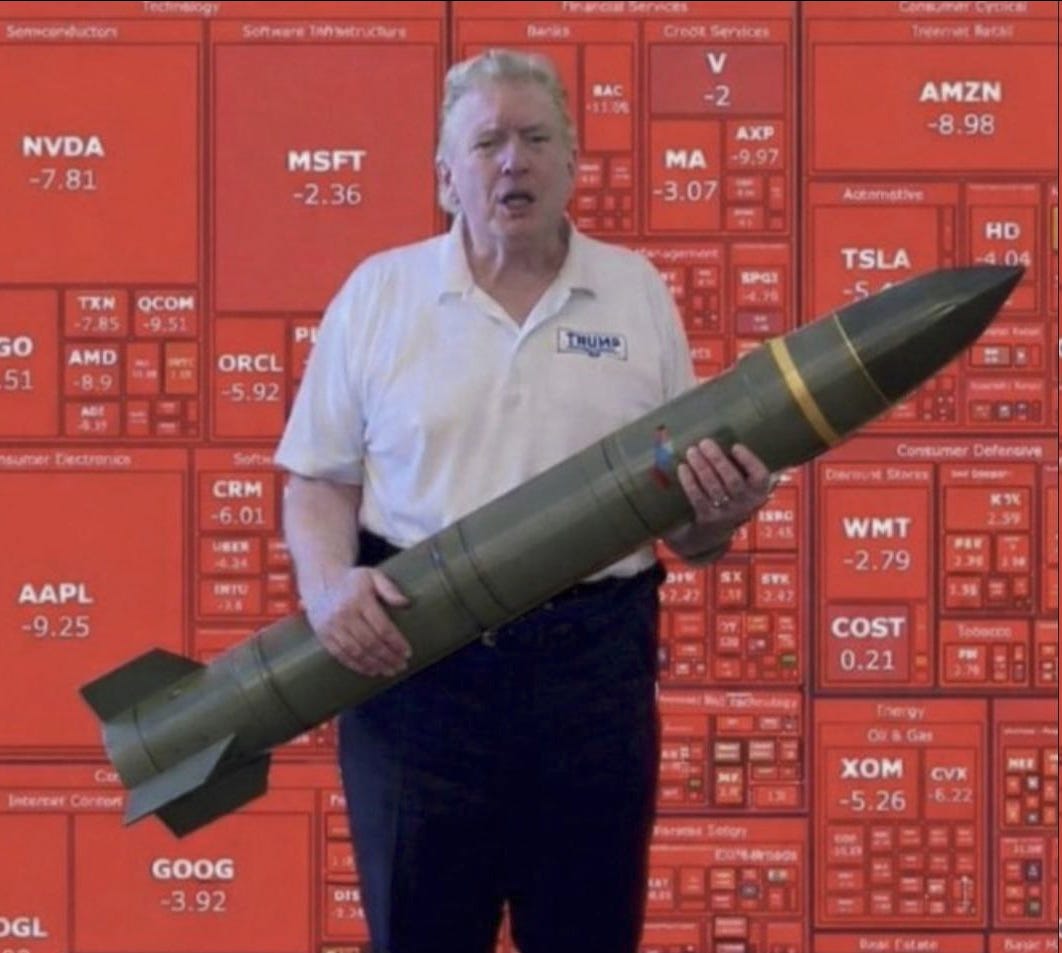
Crucially, the threat to close the Strait of Hormuz looms not as a bluff, but as an imminent lever of global economic strangulation. Iran has made it clear that if pushed to the brink, it will choke the world’s oil supply, turning a regional war into a global depression. This capability adds a layer of complexity that brute force cannot solve. The U.S. can sink ships, but it cannot instantly reopen a choked artery of the global economy without catastrophic cost.
The conclusion is not a vague hope for diplomacy, but a grim acknowledgment of a strategic blunder. The escalation trap has snapped shut because the U.S. assumed it could control the intensity of the conflict. It cannot. Iran has demonstrated that it possesses both the will and the way to make the cost of victory prohibitively high. The U.S. is now stuck in a war against an adversary that does not need to win militarily to succeed; it only needs to ensure that the price of continuing becomes too high for Washington to bear. The “all-powerful” nation finds itself bleeding from bases it thought were secure, facing an enemy it thought was broken, and realizing too late that some traps are designed specifically for those who think they are too strong to be caught.
One of the enduring consequences of this disaster will be the hard, bitter pill of geopolitical humility America must now swallow. For decades, Washington operated under the comforting delusion that smaller nations were merely pieces on a chessboard, moving only when the superpower allowed it. This conflict has shattered that illusion, forcing a reluctant acknowledgment that other nations possess genuine agency. Iran has demonstrated that it is not a puppet waiting for strings to be pulled, but an independent actor with its own red lines, strategies, and capacity to dictate terms. While not wholly true, the U.S. has long assumed that its will is synonymous with destiny. No more. In trying to prove its dominance, America has inadvertently proven the autonomy of its adversaries, revealing a world where the “unipolar moment” is dead, and where even the mightiest hegemon can be checkmated by a skillful player operating with resolve.
I can guarantee Trump will find a way to make things worse.
If our experience in Afghanistan wasn’t humbling enough, what could be?